
A common observation: a bottle of red wine produces a noticeably worse hangover than the same volume of alcohol consumed as vodka. People who can drink five vodka tonics and feel rough wake up actually unwell after four glasses of cabernet. This is real, it’s chemically explainable, and it tracks with both lab studies and what most heavy wine drinkers report. This article is part of our Hangovers hub, the complete guide to preventing and recovering from a hangover.
This article covers what’s actually different about wine, why red is worse than white, why vodka and gin are easier on you, and what this means for drink choice when you care about the next morning.
# The volume comparison: matching alcohol content
Let’s establish the comparison first, because people often miss this. A standard bottle of red wine (750ml at 13% ABV) contains about 9.75 standard UK units of alcohol. A typical 25ml shot of vodka (40% ABV) contains 1 unit. Five vodka shots equals 5 units; a bottle of wine equals nearly twice that.
So when someone says “wine gives me worse hangovers than vodka,” part of what they’re noticing is that they drank more alcohol from the wine. Volume matters, and people often underestimate how much wine they’re actually putting away.
But even at matched alcohol content, wine produces worse hangovers than vodka. A pint of vodka and tonic (about 2 units) versus two glasses of red wine (about 4 units, but if you adjust to 2 units of wine for the comparison) still shows wine producing more hangover symptoms. The chemistry beyond just the alcohol is the explanation.

# What’s in wine besides alcohol
Wine is a complex fermented beverage with hundreds of compounds beyond ethanol. The hangover-relevant ones:
Tannins. Polyphenolic compounds that come from grape skins, seeds, and oak barrels. They give red wine its drying mouthfeel and astringency. They also trigger headache in many people, particularly migraine-prone ones, by promoting serotonin release and blood vessel changes. Red wine has substantially more tannins than white. Aged reds and “big” reds (Cabernet Sauvignon, Malbec, Syrah) have more tannins than lighter reds.
Histamines. Produced during fermentation, particularly in red wines and some aged whites. Trigger headache, flushing, and runny nose in histamine-sensitive people. Some people lack enough of the enzyme (DAO) that breaks down histamines, making them especially sensitive.
Sulfites. Added as preservatives in nearly all commercial wines. Some people are genuinely sulfite-sensitive and react with headache, but this affects fewer people than the wine industry’s “low sulfite” marketing suggests. Most wine headaches are tannin or histamine driven, not sulfite driven.
Congeners. Byproducts of fermentation, including methanol, fusel oils, and various aldehydes. Red wine has more congeners than white. The dark color itself signals more compounds in the bottle. We covered the broader chemistry in Hangover-Free Drinks: Low-Congener Alcohol Choices.
Sugar. Some wines (sweet whites, dessert wines, mass-market reds) have residual sugar. The sugar can amplify next-morning blood sugar crashes and contributes to headache in some people.
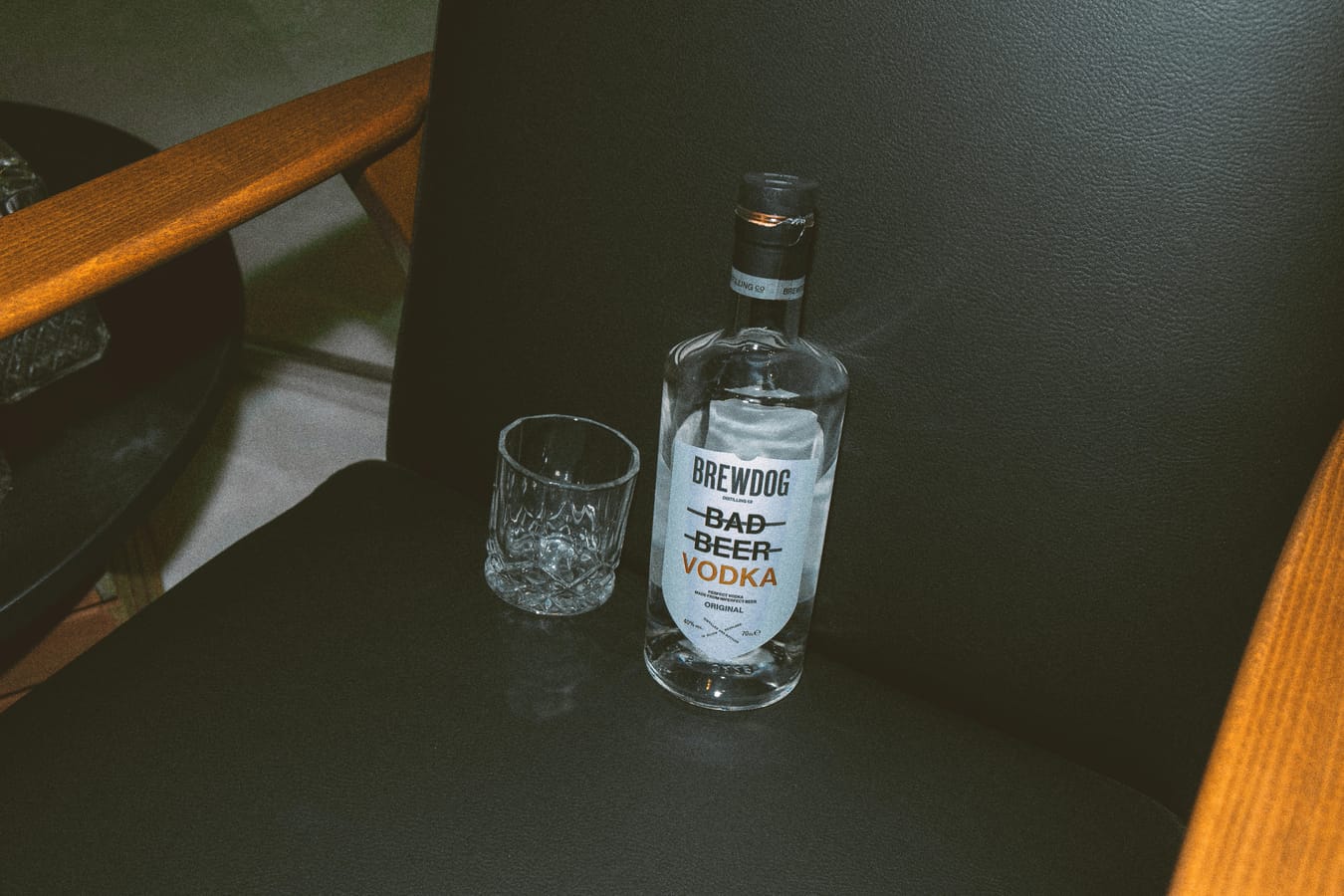
Vodka, by contrast, has been distilled and filtered to the point where almost none of these compounds remain. Pure vodka is essentially ethanol and water with traces of grain or potato starch. Whatever you experience from drinking vodka is almost entirely the ethanol itself.
# What’s actually different in your body
When you drink wine, your body has to process both the ethanol and the supporting cast of compounds. Several mechanisms compound the hangover:
Tannin-induced headache. Tannins trigger serotonin release and vasoactive responses that produce headache independent of alcohol effects. Some people get a headache from one glass of red wine before any meaningful alcohol effect occurs.
Histamine-induced inflammation. Histamines amplify the inflammatory response that’s already part of any hangover. The next-day inflammatory load from wine is higher than from clear spirits.
Liver enzyme competition. Methanol and other congeners in wine compete with ethanol for the same liver enzymes. The acetaldehyde from regular ethanol metabolism stays around longer because the liver is also processing the wine’s other compounds. We covered this in The Science of a Hangover.
Sulfite reactions in sensitive people. For the subset who are genuinely sulfite-reactive, the sulfite content adds another headache trigger.
Slower clearance overall. All those extra compounds slow the rate at which your body returns to baseline. The hangover lasts longer.
The result: at matched alcohol content, wine produces a headache that arrives faster, hits harder, and lasts longer than the equivalent vodka. The dehydration component is similar; everything else is amplified.

# Why red is worse than white
Red wine is fermented with the grape skins and seeds, white wine without. The skin contact during red wine fermentation extracts:
- More tannins (skin tannins plus seed tannins)
- More histamines
- More polyphenols and flavonoids
- More coloring compounds
White wine still has alcohol, sulfites, and some congeners, but the tannin and histamine load is much lower. The hangover from white wine is closer to the hangover from clear spirits than to the hangover from red wine.
A practical ranking from gentlest to harshest at matched alcohol volume:
- Champagne and prosecco (low congener, but bubbles speed absorption, so pace matters)
- Riesling, sauvignon blanc, pinot grigio (light whites, low tannin)
- Chardonnay, especially oaked (still white but more compound load)
- Rosé (some skin contact, intermediate)
- Light reds: pinot noir, beaujolais
- Medium reds: merlot, chianti
- Heavy reds: cabernet sauvignon, malbec, shiraz, port
If you love red wine but find the hangover punishing, switching to lighter reds (pinot noir, beaujolais) often helps noticeably more than people expect. The full reds load you up with tannins; pinot noir is much lighter on them.
# Why champagne and prosecco are special
A specific note on bubbles: carbonation speeds up alcohol absorption. The CO2 increases stomach motility, pushing alcohol into the small intestine faster. Champagne hits your bloodstream faster than still wine.
Two implications:
- You get drunk faster on champagne than on the same alcohol content of still wine
- Peak blood alcohol is higher, which produces a sharper rebound
But champagne has lower tannin and histamine loads than red wine. The net effect is interesting: champagne produces a different hangover (more glutamate-rebound, less inflammation) but not necessarily a better or worse one overall.
Practical guidance: if you drink champagne, drink it slower than you’d drink wine. Pace beats chemistry here.
# Why beer is its own category
Beer sits between wine and spirits on the hangover scale, but for different reasons.
Light beers (lagers, pilsners) are low congener and produce mild hangovers at matched alcohol volume. Dark beers (stouts, porters, heavy IPAs) have more compounds and produce worse hangovers, similar to dark spirits.
The “beer hangover” most people think of is partly the volume problem: you drink more total fluid with beer, which means more total alcohol consumed in a session than equivalent wine drinking. Six pints is roughly 12 units. Two glasses of wine is roughly 4 units. Six pints produces a substantially worse hangover than two glasses of wine even though the beer is lower-congener per ml of alcohol.
If you compare matched alcohol volumes, light lager produces a milder hangover than red wine, similar to vodka. Heavy IPAs and stouts produce hangovers more similar to red wine than to clear spirits.
# Practical implications
If you care about the morning:
For matched-alcohol comparisons: clear spirits produce the mildest hangover, light beer and white wine are next, red wine and dark spirits are the worst.
For real-world drinking patterns: people drink different volumes of different drinks. A pint of beer (around 2 units) takes longer to drink than a 25ml shot. The pacing effect can offset the higher congener load.
The best low-hangover option: vodka or gin with mixers, sipped slowly, with food. Boring but reliable.
The worst common option: a heavy red wine drunk fast, late at night, on an empty stomach. Concentrated tannins, histamines, congeners, and dehydration all hitting at once.
The wine drinker’s compromise: switch to lighter reds (pinot noir, beaujolais) or whites if you want to keep drinking wine but ease the morning. Drink water alongside. Stop earlier in the evening.
# What about red wine “headache” specifically?
A subset of red wine drinkers get headaches from a single glass, no real alcohol-volume issue. This is the famous “red wine headache” (RWH). Causes include:
- Tannin sensitivity (most common)
- Histamine sensitivity (second most common)
- Sulfite sensitivity (less common than people assume)
- Tyramine in some red wines (rare)
If you’re prone to red wine headaches specifically, the underlying mechanism affects which interventions help. Tannin-driven RWH is best avoided by sticking to lower-tannin wines. Histamine-driven RWH may respond to taking an antihistamine before drinking (consult a doctor if you want to try this). Sulfite sensitivity is harder to navigate and may suggest switching to spirits.
# How AlcoLog tracks drink-type patterns
AlcoLog’s catalog includes 1,174 drinks with brand-level detail (44 wine varietals across reds, whites, rosés, sparkling, and fortified, plus 596 beers, 441 spirits, and 93 liqueurs). Each drink logs with its actual ABV and category, so the History view’s session list shows what you drank, not just how much.
Over time, sessions where you drank heavy reds versus sessions where you drank vodka or light beer become distinguishable in the data. The sessions you remember as bad mornings will line up with the patterns the data shows.